
Dancers “fly six directions”
but show never falls
by Arianne Bergman '13
ARTS & ENTERTAINMENT CONTRIBUTOR
The dance “Tobi Roppo (1986),” whose name was inspired by a Kabuki term meaning “flying in six directions,” was the opening piece of the Spring Dance Concert, held on March 4 and 5.
 “Flying in six directions” signified the readiness of the performers to move in any direction. The piece was broken into four poetically titled parts: “first you see a flash,” “then you feel the heat,” “and then there is nothing,” and finally “rebirth.” Senior Linda Lam’s solo for “and then there is nothing” was both peaceful and stirring; every dancer gave a committed performance to this highly conceptual piece.
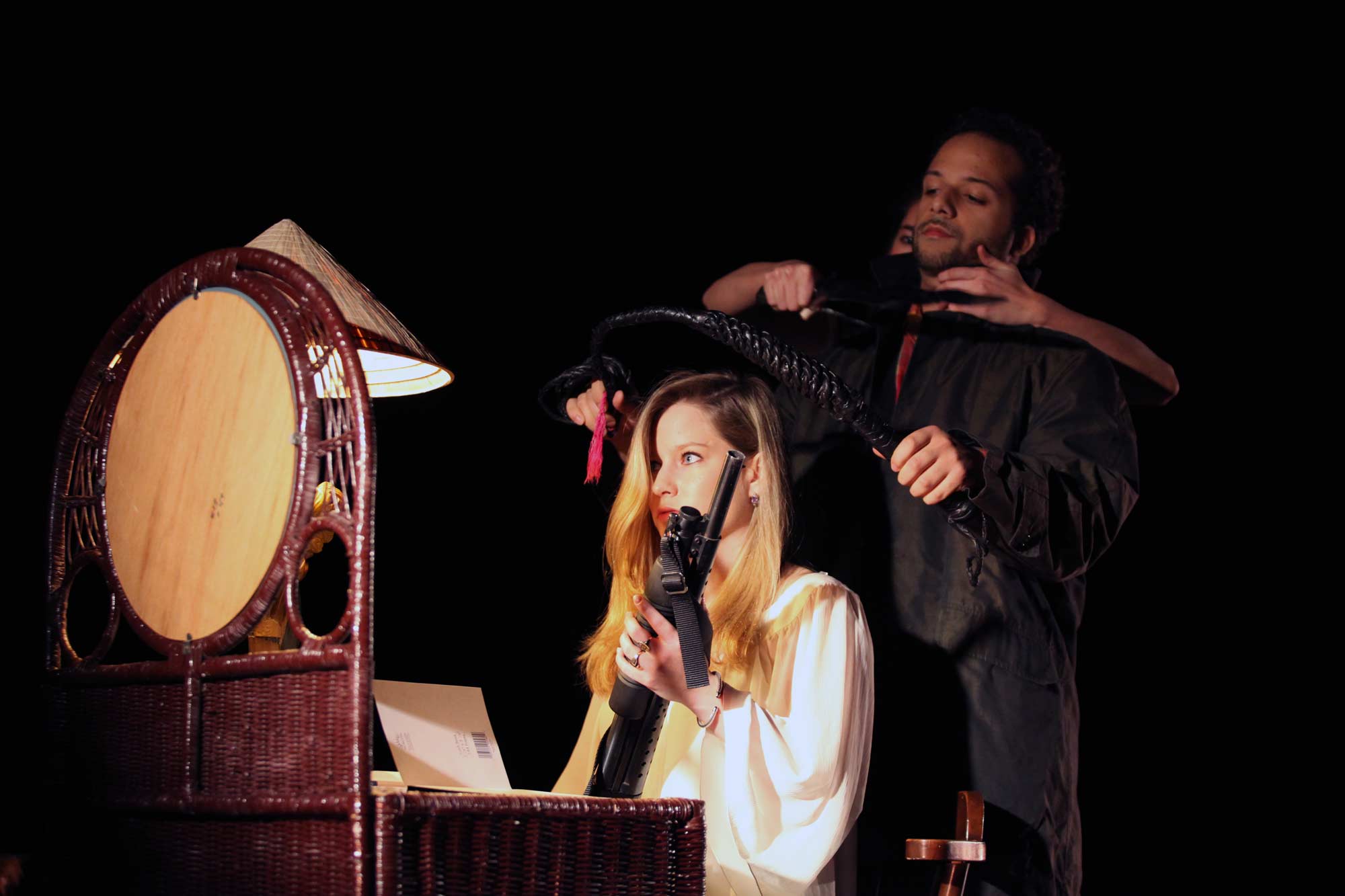
Another piece, “The Slave Trader’s Daughter,” was dark and haunting. From the opening moment—two girls sitting, illuminated by their desk lamps, with a man between them whipping at the ground—to the end—a freeze just as one of the women is about to stab one of the men—the piece kept the audience on their toes. Despite not being a conventional dance piece, it still managed to communicate feelings of fear and tension. The reversal in the final moment, in which a woman fights back and gains power over her captor, was especially compelling.
 Next, Kunter Kula ’11 and Samantha Rabin ’11 performed a piece entitled “No One’s Profit.” Using the full stage, the two chased each other to music by the Talking Heads. Occasionally, they would stop to pull a crumpled bill from their jean pockets and drop it to the floor. They also fought, pulling each other down. Although much of the dance was not direct partner work, it felt consistently like a partner dance because of the tension the dancers created in how they worked around each other on the stage.
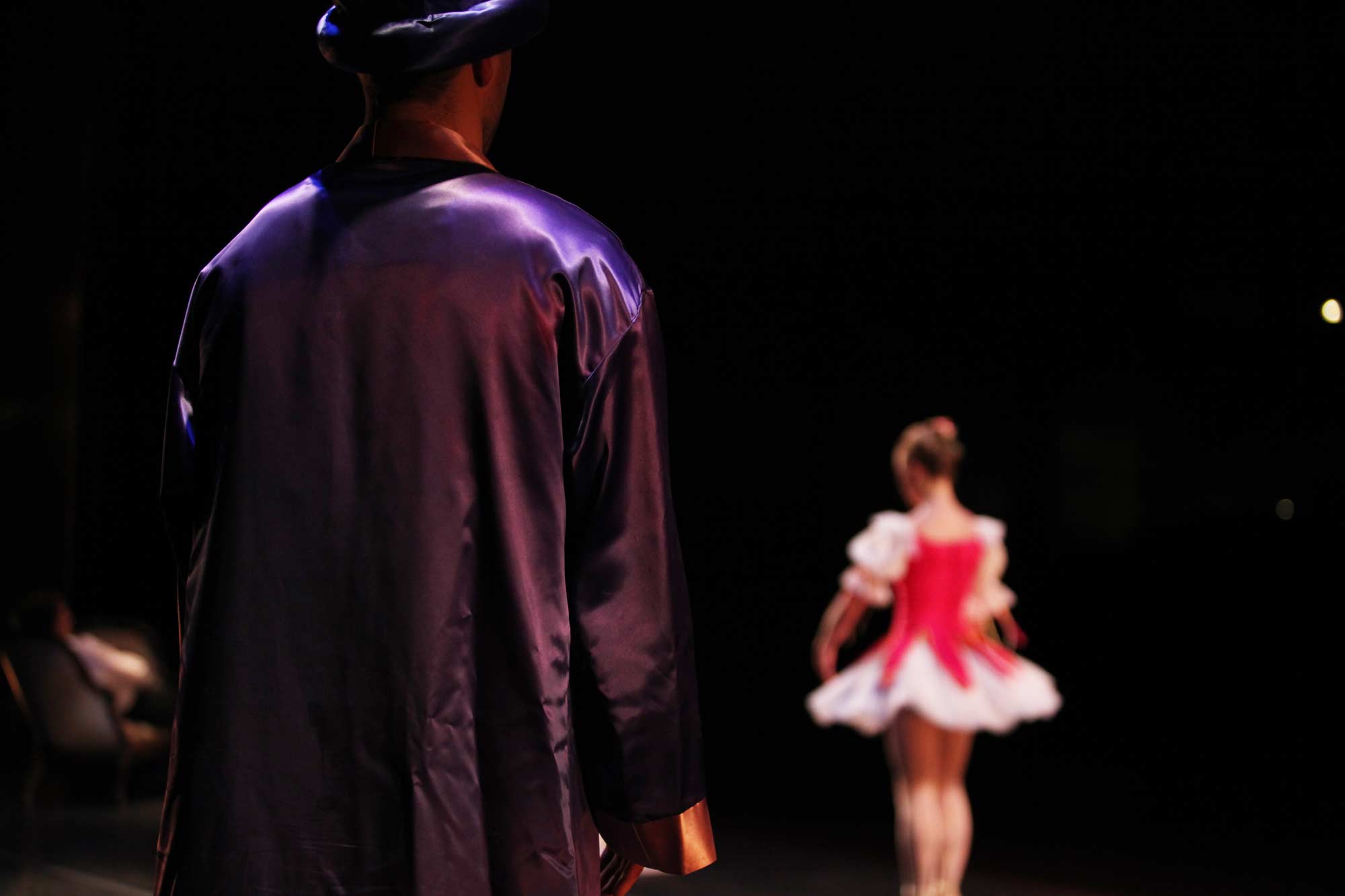
After intermission, the students performed a section from “Coppelia,” a well-known comic ballet that tells the story of the inventor Dr. Coppelius and the life-size dancing doll he creates. Frantz, danced by guest choreographer Olivier Wecxsteen, is the village swain who forgets his love Swanilda, danced by Selby McRae ’11, and falls in love with the doll. In revenge, Swanilda sneaks into the inventor’s studio with her friends and pretends to be the doll, fooling both Frantz and the inventor when she “comes to life” and dances on her own.
The performers imbued the comic ballet with an admirable spirit, sending the audience into fits of laughter at their groundless fear of the doll. Creeping together in a line, one foot out at a time and running away with their legs shaking, the dancers fully assimilated into their roles and greatly amused the packed Wellin Hall. McRae gave a startlingly talented performance when pretending to come to life as the doll. The entire performance was light, fun and danced well.