Yes, past successes should instill future trust.
by Rachel Lieb '13 and Keith MacArtney '13
OPINION EDITORS
In order to remain a competitive liberal arts college, Hamilton needs to use its money to establish new facilities, while maintaining and improving old buildings. These costs are compounded by an endless number of operating costs associated with running a 1,300 acre campus in wintery central New York. According the President Stewart’s 2009-10 Budget Summary, campus operating costs made up about 42 percent of the College’s total budget.
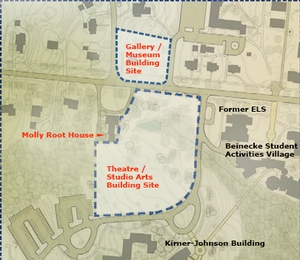
With these heavy costs in mind, Hamilton has done an impressive job enhancing its already expansive campus facilities. In the last ten or so years, the College has financed a major makeover of its facilities, which is most evident in the following endeavours: the new Sadove Student Center and bookstore at Emerson Hall in 2010, a renovated Kirner-Johnson building in 2009, the new Science Center in 2007 and plans for the new Wellin Museum of Art in 2012, along with entirely new arts facilities including a new theater shortly after. The College invested over $150 million in its facilities over the past decade, according to college publications.
This impressive list does not even begin to touch upon the constant updates to our campus. Are we so quick to forget the seemingly daily e-mails from the College this past summer, updating us on the numerous renovations and projects to improve our already beautiful campus?
Hamilton receives a lot of donations from its often overly generous alumni and parents, specifically for new projects and endeavors. These new projects reflect the voice of the entire community, including the students.
Some of the budget allocations for student activities are often debated. For example, the benefits of having an outdoor ice rink are most often criticized by the student body. Often, organizations whose requests for funds are rejected by Student Assembly are most prone to questioning and criticizing Hamilton’s budget allocations.
However, decisions made regarding the development of our campus are usually supported by the majority of the community. For one, there is no question that the new renovations and additions to our campus benefit the overall progression of our reputation as a prominent liberal arts college.
Danielle Brockmann ’13 said, “The new center would provide a larger theater and a black box for students and guest performances which we do not currently have, making us on par with other liberal arts colleges.”
Since not everyone has a specific need for a new black box or a larger theater, the new arts facilities and museum have been called into question by non-arts members of our community.
Despite this belief, these decisions and projects are indeed intended for the benefit of everyone. With the new arts center, more concerts, productions and performances will be offered to the general Hamilton public. The current Hamilton facilities are generally lacking in space and availability. Currently, Wellin Hall is only made available to our campus for a very short and specific list of events. There are only a couple of a capella concerts allowed in Wellin per year.
The new facility will allow a cappella groups to perform in a larger venue, no longer forcing them to perform awkward Opus 1 concerts. The larger theater will seat more people for all campus productions, but it will be more readily available for use by groups like Untitled @ Large. With larger arts facilities, more students will be able to enroll in the arts classes which are some of the first classes to fill during registration. With the new museum along with more gallery space, the College will be able to display more student artwork.
In the past, the immediate campus reaction to development plans have been extremely varied. It makes sense that current decisions are called into question. However, considering that the final product of our development projects have been consistantly successful, we should put more trust into the decisions made by our college.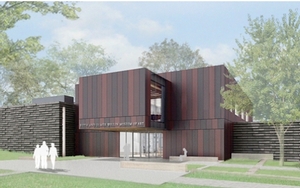
No, we should think more crtically about how we spend.
by Evan Klondar '11
EDITORIAL PAGE EDITOR
Hamilton is a college that spends lots of money every year. There are obviously operating costs to running a college: professors need to be paid, lights need electricity, water needs to come out of the taps. Beyond that, though, is the money Hamilton spends on big-picture initiatives. Major development projects in the last decade include the Science Center expansion (over $50 million), the Kirner-Johnson renovation ($23 million) and the Sadove Student Center at Emerson Hall expansion (about $8 million). The planned Arts Center and Wellin Museum will cost $35 million. When this much money is on the table, we should be asking serious questions.
The biggest question is: are students getting value out of these projects? Certainly. The Science Center and KJ were both expanded during construction, which allowed for more classroom space. All available accounts suggest that the science facilities prior to the creation of the Science Center were woefully outdated. KJ is certainly more useful (and more aesthetically pleasing) with the recent renovations. But do we really need a new student center when Beinecke is barely utilized? Is a museum really the best use of funds for students?
Both Root Hall and Benedict Hall are in desperate need of improvement. The classrooms are not up to par—especially when compared to the new facilities in the Science Center and KJ. But there is no one seriously lobbying for renovation. Why? Because neither building has a concentrated group of departments looking out for it. KJ has the humanities; the Science Center has the sciences. Root and Benedict are, in many ways, “caught in the middle.” Root primarily serves the English department, while Benedict is spare space used by various departments around the College.
Saying that money currently allocated for a museum would be better spent on improving classrooms is not to denigrate the generosity of the Wellin family. They have made an enormous impact on students’ experiences at Hamilton through their contributions. But in the current economic environment, improving existing infrastructure and preparing classrooms for the future seems a better use of money than constructing new buildings.
Ignoring buildings like Root and Benedict has serious consequences. KJ is filled to capacity most mornings, which makes lunch in McEwen a mad rush for tables. Despite the new layout, the line for food frequently stretches to the coffee and tea bar, while the line for entry into the dining hall could easily be confused with the line for Opus—it sometimes stretches far beyond the McEwen stairs. Alleviating this concentration of classes in KJ would result in a better spread of students around the campus, ending the lunchtime rush.
These are not the only questions we should be asking. We have entered a new financial age in which everything must be questioned. This is not to say that we must cut services. After questioning, we may realize that we do not need to change a thing. A core part of the Hamilton education, however, is to create critical thinkers.
So here are some critical questions: Is the athletic budget on campus valuable? How much investment should we be making in long-term projects? How much money should go to financial aid? Are professors’ salaries too high? Are we being too thrifty (or too generous) with our endowment? Is the bureaucracy of the College efficient? We do not need the answers right now. But the community as a whole should be asking many more questions along these lines to make sure that the Hamilton community gets the most out of every dollar spent by the College.