Arts and Entertainment
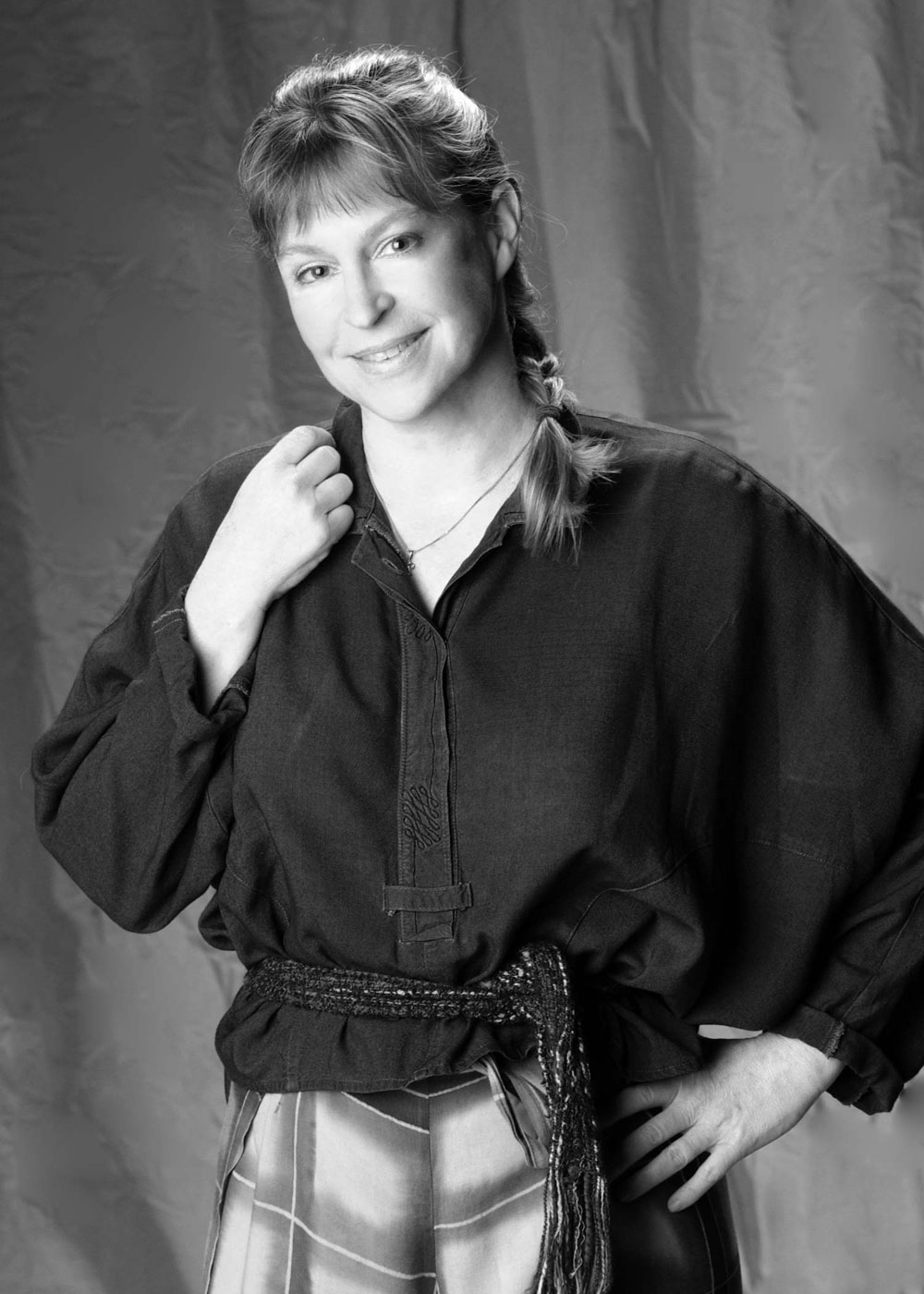
Edgecomb weaves a tale of sadness
By Taylor Coe '13
October 4, 2012
Diane Edgecomb does not have a happy story to tell.
On Tuesday night in the Red Pit, armed with only a chair, a floor mat, and a scarf, professional storyteller Edgecomb told the story of her project to collect traditional stories from the Kurdish people in a rural region of Turkey. Using a combination of first-person narration, character voices, traditional folk stories and Kurdish folk songs, Edgecomb painted a complex picture of cultural clashes and political problems.
In addition to this storytelling piece stitched together from her experience, Edgecomb also compiled a collection of stories, published in 2007 as A Fire In My Heart.
The Kurdish people of Turkey—those visited by Edgecomb—have not of recent had a happy political situation. Oppressed by the Turkish government for the past few decades, the Kurds have endured discrimination on several fronts, in particular that of their language. Although the ban has partially lifted in the time since Edgecomb did her research, there was a period in which use of the Kurdish language—not only in the media, but also in everyday life—was outlawed in the country.
So understandably, Edgecomb’s gathering of traditional stories in rural Kurdish villages was fraught with danger—constantly in threat of being uncovered not only by government workers, but also by Kurdish informants within the village.
“Kurdish region of Turkey a little bit dangerous,” the carpet dealer warns Edgecomb’s narrator in the performance when she first explains her desire to collect stories there. The carpet dealer—bound to become her guide and translator in Turkey—goes on to lay out what most people would consider more than enough reason to stay away: the violence between the Kurds and Turks and the problem-ridden borders with Iran, Iraq and Syria.
But the carpet dealer’s protestations, of course, are to no avail; Edgecomb is set in her decision to collect stories from the rural Kurdish villages.
It is the journeying elements of Edgecomb’s story—the traveling between villages, the uncertainty, the mysterious old women who pull on Marlboros and tell fantastical tales—that pull her story out of the morass of political advocacy and character sketches that it threatens to fall into.
Indeed, one of Edgecomb’s great talents is an eye (or, rather, an ear) for detail. When her narrator enters a room, Edgecomb describes it with an impeccable sense of place. In particular, the “center of the world”—the carpet dealer’s shop in Turkey—rings not only with authenticity, but also with an earnest wonder.
Her love of detail extends to characters as well, but those descriptive powers do not suit her treatment of character nearly so well. Placing a huge emphasis on the physicality and the voices of the characters, Edgecomb demonstrates her chops as an actress, but does not help her story. Instead, her characters end up sketched with an unappealing preciousness. One gets the feeling that children would respond to them well; their emotional impact on an adult audience seemed not so strong.
Additionally, it is worth mentioning another, subtler way in which these characters are problematic. The only unaccented, unaffected character story is Edgecomb’s narrator, while—mostly through the use of accent—Edgecomb imposes a kind of stereotypical otherness upon her Kurdish characters, often representing them as being silly and slightly outlandish.
In light of this subtle division between East and West, one crucial question that rises to the surface is whether or not Edgecomb’s works ought to be seen through the lens of ethnography or through that of personal narrative.
“I don’t look at the performance as particularly ethnography,” said Edgecomb of this division during an interview. “I wanted it to be an oral document of a particular journey.”
But because Edgecomb’s work does not function as ethnography, one cannot help but wonder to what extent it ought to at least loosely be viewed as cultural appropriation. After all, her performance quite literally borrows the voices and stories of the Kurdish people. Edgecomb, however, claims that the notion of her performance as appropriation would depend on a lack of cooperation on the part of the Kurdish culture.
“It’s when it’s a worry or concern of the culture,” Edgecomb said. “In Kurdish culture, they are so grateful and so thankful and so wanting me to do this. It’s very important to them for their story to get out.”